Add Row
Add Element
Icon of a newspaper on a transparent background for SEO purposes
update
Thrive Daily News
update
Add Element
  • Home
  • Categories
    • Confidence & Self-Image Corner
    • Anti-Aging & Longevity Zone
    • Whole Body Health & Energy
    • AI News & Trends
    • Total Health Dentistry Corner
    • Reputation Spotlight
May 22.2025
3 Minutes Read

Emerging Threats to Bees: What You Need to Know for a Sustainable Future

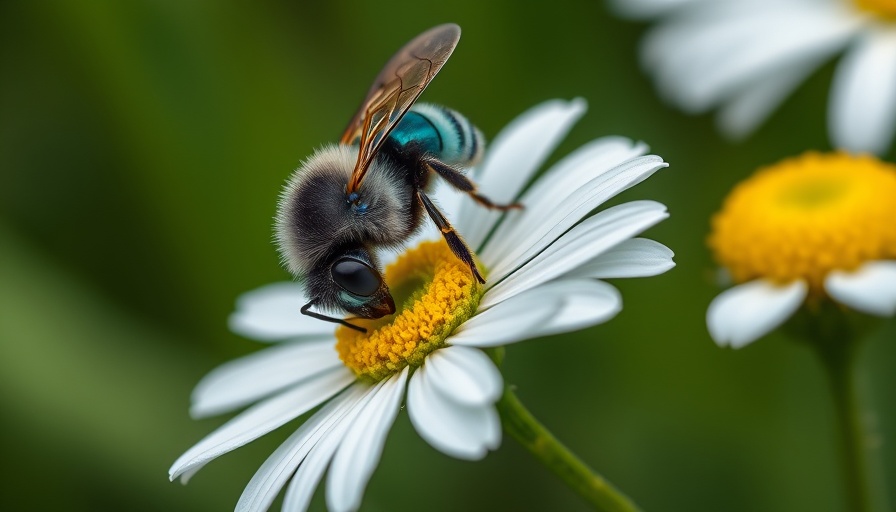
Black and turquoise bee on a white daisy, highlighting emerging threats to bees.

Bees and the Unseen Battles Ahead

With the increasing awareness surrounding environmental issues, it’s hard not to feel a bit overwhelmed by the constant barrage of challenges facing our planet. Among the most worrisome indicators is the alarming decline of pollinators—those wonderful little creatures critical to food production and ecosystem health. On May 20, United Nations World Bee Day, a cutting-edge report from Bee:wild uncovers emerging threats to these essential species that we might not have considered before.

According to this report, peer-reviewed by leading experts in the field, threats like conflicts, microplastics, and artificial light pollution uncover a whole new range of challenges that bees and other pollinators must contend with over the next decade. One thing is crystal clear: our buzzing friends are not just grappling with pesticides and habitat loss; they are facing the complexities of our modern world.

The Top Emerging Threats to Pollinators

The report identifies a dozen significant concerns, ranked in order of their novelty and impact:

  • Wars and Conflicts: Conflicts force nations to simplify their agricultural output, often growing fewer crop varieties. Less variation means fewer food sources for pollinators, putting them at greater risk.
  • Microplastic Pollution: Smaller than a grain of rice, microplastics can infiltrate beehives and pollinators' diets, impacting their health and longevity.
  • Pesticide Cocktails: The dangerous mixture of different pesticides, particularly in developing nations, further compromises pollinator health.

And that’s just scratching the surface! Others on the list include the effects of artificial lights at night, which confuse pollinators and inhibit their nighttime feeding habits by reducing their flower visits by a staggering 62%!

Why Should We Care?

This isn’t merely an ecological concern; it’s one that impacts our food systems, climate resilience, and, ultimately, our economic security. Think about it: according to the study, nearly 90% of flowering plants, alongside the majority of our global crops, rely on pollinators. The health of our ecosystems and agriculture hinges on their survival.

Lead author Simon Potts emphasizes the urgency of acting swiftly. "By identifying these emerging threats early, we can develop strategies to mitigate their impacts. This is not just a conservation issue; it’s about the future of our food supplies and our shared environment," he shared in a press statement. Isn’t it sobering to think that our health and well-being are intertwined with the fate of these creatures?

Counterarguments and Diverse Perspectives

While the findings of the report are alarming, it is essential to address some counterarguments surrounding conservation efforts. Critics often point out the high complexity of resolving the multifaceted issues threatening bees. From industrial agriculture to urban living, the solutions aren’t merely about banning pesticides but require systemic changes and a unified approach from multiple sectors.

However, some also argue about the effectiveness of conservation programs. If resources are channeled into misguided projects, the intended benefits could backfire. It’s vital that we invest wisely in initiatives that genuinely support pollinator health and longevity.

Your Role in Pollinator Protection

So, what can you do to help the bees? First, consider planting a garden with native flowering plants—something that’s beneficial for pollinators! You can also support local farmers who practice sustainable agriculture and reduce single-use plastics in your daily life.

Let’s not forget that every action counts. Awareness is the first step, and understanding what diminishes pollinator health is crucial in our collective mission. Even small lifestyle changes can resonate significantly—every little effort contributes to a broader push for change.

A Call to Action

This May, as we celebrate bees, let's also commit ourselves to protecting them. Consider donating to local conservation groups dedicated to pollinator health or advocating for policy changes that emphasize ecological sustainability. Together, we can ensure that bees and other pollinators thrive long into the future. Help safeguard our world, one buzz at a time.

Whole Body Health & Energy

0 Comments

Write A Comment

*
*
Related Posts All Posts
02.20.2026

Mastering Mindful Posting: W.A.I.T. Before You Share Online

Update Pause Before You Post: The Importance of W.A.I.T. In a world where social media reigns supreme, our instantaneous impulses can often lead us down a slippery slope of emotional reactions. For professionals, wellness enthusiasts, and parents aged 25 to 45, understanding the psychology behind social media engagement is crucial. This is where the W.A.I.T. practice comes into play, a mindful approach designed to help us pause and reflect before hitting 'post.' Why W.A.I.T? Understanding the Psychology of Posting The W.A.I.T. practice consists of four essential questions: W = Wide Audience: Would I say this in front of my colleagues or at a public gathering? A = Affect: Am I emotionally stable enough to share this? I = Intent: Could my message be misunderstood? T = Today: Is this something that can wait a day? Taking the time to evaluate these questions can transform impulsive sharing into well-considered communication. As Dr. Tristan Gorrindo emphasizes, our emotional states heavily influence our posting behavior, especially among adolescents whose brains are still developing the capacity for judgment. This impulsivity can have lasting consequences, making the mindful practice of W.A.I.T. relevant for all age groups. Comparing Ourselves to Others: The Digital Dilemma Social media can fuel the toxic habit of comparison, which often results in feelings of inadequacy. Ellen Choi's analysis highlights that social media isn’t a true reflection of reality. Instead, it's a carefully curated highlight reel that can distort our self-image. In a recent Canada-based study, 39% of users reported feeling envious or inadequate while scrolling through social platforms. This has profound implications for mental health. By employing the W.A.I.T. practice, you can actively disengage from this cycle of negative self-perception. Benefits of Mindfulness in Social Media Usage Mindful social media practices, such as those highlighted in a recent article on Tiny Buddha, can significantly enhance our online experience. By setting intentions before engaging, being aware of our emotions, and choosing to follow uplifting content, we can cultivate a more positive digital environment. For instance, making a habit of complimenting others, as suggested, not only uplifts those around you but also enhances your own mental well-being. This exchange creates a ripple effect of positivity that combats negativity. Becoming More Intentional in Our Digital Footprint Implementing W.A.I.T. isn’t just about pausing; it’s about being purposeful in your digital engagement. Recognize that every post, like, and comment contributes to your overall narrative. By intentionally choosing what to share, you can build a digital persona that aligns with your values, promoting a wholesome image that resonates with others. In addition, consider the impact of your online interactions on real-life relationships. Will a poorly thought-out comment damage a friendship or create misunderstanding? Engaging mindfully with social media can protect these real-life connections. Future Trends: Technology and Well-being Integration As we continue to navigate the digital landscape, the focus on mental wellness in social media will likely grow. Tools and applications centered around mindfulness will help users manage their online behaviors, reflecting a collective understanding of the need to prioritize mental health. Moreover, employers are beginning to recognize the impact of social media on workplace productivity. Initiatives promoting mindfulness and moderation can enhance overall employee well-being, leading to a healthier work environment. Incorporating Mindfulness into Daily Life Consider setting a specific timeframe for social media use each day. This method encourages conscious consumption rather than mindless scrolling. Furthermore, practice gratitude by reflecting on the positives in your life before opening a social app. This habit can shift your mindset towards one of appreciation rather than comparison. Conclusion: Transforming Our Digital Interactions With the prevalence of social media, adopting the W.A.I.T. practice can guide us towards more thoughtful, empathetic digital interactions. By asking ourselves critical questions before posting, we can cultivate a healthier online community that fosters connectedness rather than conflict. So, before you tap that 'post' button, pause, reflect, and assess. To further enhance your social media habits, download the Mindful App and subscribe for mindful insights and tips on maintaining balance in your digital life. Embrace mindfulness today and transform your online experience into one filled with positivity and intentionality.

02.19.2026

How a Simple Meditation Can Help Restore Your Inner Calm

Update Reconnecting in Chaotic Times: Finding Calm Amidst the StormIn an era marked by unrest and collective anxiety, many individuals are grappling with feelings of burnout and disconnection. The incessant barrage of negativity from around the world can easily leave us feeling overwhelmed, as if we are drowning in a sea of suffering. But in such trying times, grounding practices like meditation become invaluable tools for self-care and emotional resilience.The Importance of Compassionate MindfulnessMindfulness isn't merely a practice; it's an invitation to reconnect with ourselves during challenging moments. Shalini Bahl's meditation on returning to oneself emphasizes the necessity of compassion during tough times when engagement may feel like an insurmountable task. It's a reminder that feeling overwhelmed does not mean you have lost your path, but rather that it is time to pause and recalibrate.Much like the "Container Practice" introduced by Sarah Pauker at the Anxiety Institute, the meditation encourages us to create safe mental spaces. In doing this, we can better hold overwhelming thoughts without succumbing to them. Just as Pauker's practice aims to enhance emotional resilience, Bahl's meditation provides a beautiful pathway to cultivate clarity, compassion, and curiosity when negativity might cloud our judgments.The Three Pathways to ReconnectAs discussed in Bahl's meditation, there are three pivotal pathways for reconnecting with ourselves: inner calm, compassion, and curiosity. Each of these pathways serves as a stepping stone towards self-rediscovery. To initiate this journey, finding a comfortable posture and focusing on your breath can be incredibly beneficial. Once grounded, Bahl invites practitioners to become aware of the sensations within the heart, thus allowing room for personal emotions to emerge. This mindfulness practice is crucial not just for personal well-being but also to foster a sense of unity with others as we acknowledge shared struggles.Embracing Difficult Emotions with MindfulnessThe journey inwards is illuminated through various approaches to mindfulness meditation, such as those discussed by Laetitia Di Franco-Freitas. Her emphasis on tuning into difficult emotions reinforces the idea that emotions provide key insights into our internal and external landscapes. Through mindfulness practices, we can learn to observe emotions without judgment, allowing space for recognition and healing.Like opening windows in a stuffy room, mindful breathing can help to clear away the heaviness of stagnant emotions. This is particularly important for anyone who faces the overwhelming tides of the world's sorrow. Instead of suppressing these feelings, embracing them through understanding and compassion transforms our anxiety into actionable steps for healing.The Power of Collective MindfulnessIn light of the recent global challenges, cultivating emotional resilience through mindfulness not only aids personal growth but also contributes to a broader collective awareness. As we engage with our own suffering and heal through practices like Bahl's meditation, we improve our ability to connect with others who are experiencing the same turmoil. This shared engagement restores our sense of agency in a chaotic world.Even in times of doubt, reaching out for support, practicing self-compassion, and embracing difficult emotions are critical. Remember that acknowledging these feelings is a courageous act and an important step forward on the path to wellness.Actionable Insights for Your Mindfulness JourneyReady to take the next step in your emotional health? Here are a few actionable insights to enhance your mindfulness practice:Start Small: If meditation feels daunting, begin with just five minutes of mindful breathing. Gradually increase the time as you grow more comfortable.Create a Ritual: Establish a specific time and space for your mindfulness practice. Consistency reinforces commitment.Connect with Others: Join a local meditation group or find online communities that resonate with your needs. Sharing experiences fosters deeper understanding and support.Engaging in regular mindfulness practices paves the way towards reclaiming emotional balance. The world is challenging, but through compassionate practices like meditation, we find the strength to navigate the chaos.Consider incorporating mindfulness into your daily ritual. Embrace the journey of reconnecting with yourself—your heart and mind will thank you.

02.14.2026

Is Compassion the Missing Ingredient to Save the Planet?

Update A Call to Compassion: Can it Save Our Planet? In today’s increasingly polarized world, the message of compassion is more crucial than ever. British author Karen Armstrong, who pioneered the Charter for Compassion, asserts that fostering compassion on a global scale isn’t just a noble idea; it’s an urgent necessity for the survival of our planet. The Foundation of Compassion At its core, compassion transcends individualism—an essential quality that the Charter for Compassion highlights through a modern interpretation of the Golden Rule. Armstrong emphasizes that true compassion calls for action, demanding we treat others not merely as we wish to be treated, but with a depth of understanding that includes the marginalized and the suffering across the globe. The New Generation of Compassionate Leaders Inspirational examples abound; cities like Karachi, Pakistan, are implementing curricula that teach compassion alongside traditional subjects. This dual approach aims to integrate empathy into daily lives, forging a new generation that sees social responsibility as vital. This aligns with insights from emotional research, suggesting that cultivating emotional awareness in children can foster a culture of compassion that extends beyond immediate communities. Why Compassion Must Be Uncomfortable Armstrong also argues that an authentically compassionate society will inherently be uncomfortable. This discomfort stems from our responsibility to confront suffering head-on, rather than distancing ourselves from harsh realities. The golden rule pushes us to care for all of humanity, including those who we might naturally see as different or distant. From Self-Compassion to Global Compassion It’s common to hear that one must practice self-compassion before extending it to others. Armstrong concurs but insists that self-compassion is the first step among many—love and care for oneself cannot be the end goal. It should propel us forward into the broader, urgent task of compassion for all beings. The Ripple Effect of Compassionate Action Every compassionate act creates ripples that influence broader social behaviors, echoing the sentiments of researchers like Paul Ekman, who has studied the emotional underpinnings of human interaction. Ekman’s explorations remind us that compassion is not just limited to immediate actions but extends to anticipatory kindness—what he terms 'distal compassion.' The Practical Benefits of Compassion As we assemble actions driven by compassion within our communities, we establish supportive environments that can inspire lasting change. Organizations that embody compassion reap benefits such as higher employee engagement, improved mental health outcomes, and stronger community ties. In workplaces where compassion flourishes, innovation and resilience tend to thrive. How to Cultivate Compassion Daily So, how do we nurture kindness amid overwhelming global issues? One actionable approach is focusing on proximal compassion—helping those literally at our fingertips. This can manifest in simple gestures: helping a colleague, volunteering in our communities, or advocating for the vulnerable. Moreover, look for ways to practice distal compassion by anticipating the needs of others and working to prevent harm in community settings. Whether it’s through educational programs or community initiatives, every small action contributes to a more compassionate worldview. Conclusion: The Power of Collective Action In the face of climate change and social injustices, compassion emerges not just as a moral compass, but as a practical tool for survival. By consciously choosing to embody compassion in our daily lives, we are not only transforming our own experiences but also setting off a chain reaction that has the potential to influence generations to come. If you’re inspired to make a difference, start by embodying both a soft front and a strong back in your interactions. Embrace the discomfort that comes with awareness. Let's work together to foster compassion in our lives and communities. Remember, every act of compassion matters.

Terms of Service

Privacy Policy

Core Modal Title

Sorry, no results found

You Might Find These Articles Interesting

T
Please Check Your Email
We Will Be Following Up Shortly
*
*
*